

Celebrating Tradition: Baylor University Hosts the 25th Annual Sacred Harp Sing
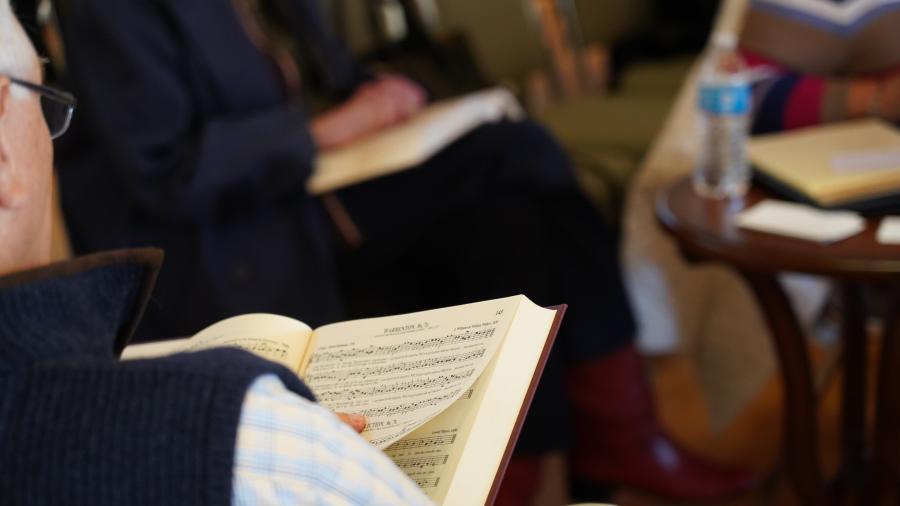
Baylor University will mark a significant milestone this year as it hosts the 25th Annual Sacred Harp Sing, a vibrant gathering that honors one of America’s oldest and most enduring musical traditions. Held each year on the Saturday before the second Sunday in February, the event brings together singers from across Texas and beyond for a day of spirited, communal music‑making in the Great Hall of Truett Theological Seminary.
In the Beginning
The first singing at Baylor was the brainchild of retired professor, Dr. Gayle Avant, who desired to bring such an event to Waco. It was first held in the historic village church and has found its home base within Truett Seminary since 2003. In thinking of his time at Baylor University, Dr. Randall Bradley, director of the Dunn Center for Christian Music Studies shared, “Holding a Sacred Harp Singing on the Baylor campus each February has been a delightful experience over the last 25 years. Having Baylor students involved in the singing has introduced this folk tradition to hundreds of young people, and some of them have continued to attend Sacred Harp singings in the future.”
For many singers, Sacred Harp is not simply a musical practice but a generational inheritance. Stuart Ivey, a longtime singer and assistant director of bands at Baylor, noted, “I am a sixth‑generation Sacred Harp singer, so it has been a part of my family’s musical and religious fiber for decades. My father grew up in Henagar, AL, in the Sand Mountain region where many churches still use The Sacred Harp as the primary worship music.”
A Living Tradition Rooted in History
Sacred Harp singing, also known as shape‑note singing, traces its origins to early American hymnody. The tradition takes its name from The Sacred Harp tunebook, first published in 1844 by B. F. White and E. J. King. Up until this year, Baylor’s annual sing has used the 1991 edition of this historic book, which preserves a rich collection of folk hymns passed down orally for generations before being written into musical notation.
For Ivey, these early experiences were foundational. “I have many early memories of Sacred Harp singings, but my first singing was as an infant,” he recalled. “Sacred Harp singing felt like a normal part of my childhood. As I reflect on my earliest experiences, I know that it provided me with many skills and experiences that have helped shape my career path and walk with Christ.”
Many of the tunes are instantly recognizable, including the melodies associated with “Amazing Grace,” “Brethren, We Have Met to Worship,” and “What Wondrous Love Is This.” The music is sung in four‑part harmony, with participants seated in a square formation—each side representing a vocal part. Singers take turns leading songs, creating a democratic, participatory experience in which every voice plays a role.
Ivey emphasized that this openness is part of what makes the style so distinctive:
“Sacred Harp singing, and shape‑note singing in general, is community‑centered and inclusive to all, regardless of musical or religious background. The choral style not only allows for a less ‘classical’ vocal technique but encourages it! The shape notes are designed to assist less‑experienced musicians in sight reading. Each person in attendance is invited to select a song and lead it in the middle of the hollow square.”
He also noted that participation is not limited by belief, stating, “While The Sacred Harp is a religious‑based songbook centered around the Christian faith, many non‑Christians have immersed themselves in the singing community.”
A Day of Community, Learning, and Song
The 25th annual gathering continues Baylor’s longstanding commitment to preserving and promoting Sacred Harp singing through the Dunn Center for Christian Music Studies. The event typically begins with a singing school at 9:30 a.m., offering newcomers an introduction to shape‑note notation and singing style, followed by the official start of singing at 10:00 a.m.
The communal aspect remains central to the day’s experience. As Ivey explained, “Most Sacred Harp singers would say that the community of singers is the most influential part of why they sing. The mutual love and respect that singers have for each other, regardless of their religious and political beliefs, is transcended through this music.”
Some singers travel thousands of miles each year to gather with others. “The most active and loyal singers attend dozens of events each year,” Ivey added, “often driving many hours or flying to their next singing destination.”
A shared lunch at midday provides additional room for fellowship and storytelling. The day concludes around 3:00 p.m., leaving participants enriched by the shared musical experience and the deep sense of connection that Sacred Harp singing fosters.
A Tradition Renewed Each Year
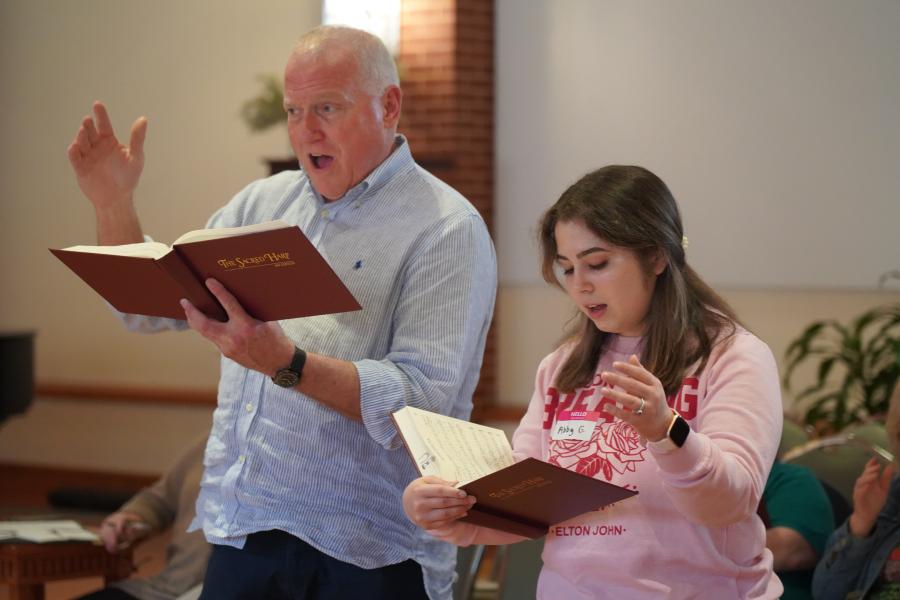
Sacred Harp singing at Baylor has become a beloved annual event, drawing students, faculty, alumni, local residents, and seasoned singers from across the region. As Dr. David Music, retired Professor of Church Music, notes, Sacred Harp singing is “an important part of the American musical heritage,” and the Baylor sing uniquely brings together traditional singers, students, and members of the community for a musical experience that is both unforgettable and marked by extraordinary fellowship.
The broader Sacred Harp world is also experiencing a moment of historic significance, especially with the recent publication of a new edition of The Sacred Harp. Ivey shared his excitement about the new release:
“This edition is the first since the widespread national and global popularity of Sacred Harp singing. Prior to the internet and the inclusion of Sacred Harp music in the 2004 blockbuster ‘Cold Mountain,’ new singers often came into the tradition through word of mouth or blind luck. Sacred Harp is now sung in almost all 50 states and many other countries.”
The 2025 edition introduces contributions from a wide array of composers. “The 2025 edition includes songs written by a diverse population of composers,” Ivey explained. “Through each new revision since 1844, new songs by living composers have infused energy into the community while continuing the musical traditions of the past 200 years.”
That excitement reached a peak in October 2025 at the United Convention in Atlanta. “The brewing excitement of the new book culminated in one of the largest gatherings of Sacred Harp singers ever,” Ivey said. “Over 700 singers attended the debut singing as composers led their songs for the first time.”
Looking Ahead
As the Sacred Harp Sing enters its 25th year at Baylor, the event stands as a reminder of the enduring power of communal song. Whether participants are seasoned singers or newcomers, the gathering offers a rare opportunity to step into a centuries‑old tradition that remains vibrant and meaningful.
Dr. Bradley explains that one of the most beautiful aspects of Sacred Harp singing is the way it naturally nurtures relationships across generations. “It is a model for intergenerational relationships,” he shared. “Sacred Harp singing is egalitarian in every way—everybody gets a chance to lead a song and be up front, children receive acceptance and value, older people are cherished and respected, and youth are encouraged as a link to the future. Where else can you find all of this?”
For many first‑time visitors, stepping into the hollow square can feel daunting, but the community is quick to welcome anyone, regardless of musical background or confidence. The egalitarian nature of the tradition means that no experience is required; the room itself carries singers along.
With both the longevity of the Baylor sing and the energy surrounding the new edition of The Sacred Harp, the tradition continues to grow, one voice and one community at a time.